Launching an OKR Program: What to Focus On
Launching OKRs starts with the right setup. Learn the key decisions of the setup and launch phase, how to handle change management and what OKR training needs.

Launching an OKR program?
You'll discover how to accelerate your business goals with OKRs (Objectives and Key Results).
In this guide, we’ll dive into the first phase of the OKR cycle, Setup & Launch, covering framework initiation, change management tactics, OKR training essentials, and the key elements of a successful launch.
What Is an OKR Program?
An OKR program aligns organizational objectives with measurable key results, ensuring every team works toward shared goals. By implementing OKRs, you can:
- Increase transparency across departments
- Drive accountability at all levels
- Accelerate strategic initiatives
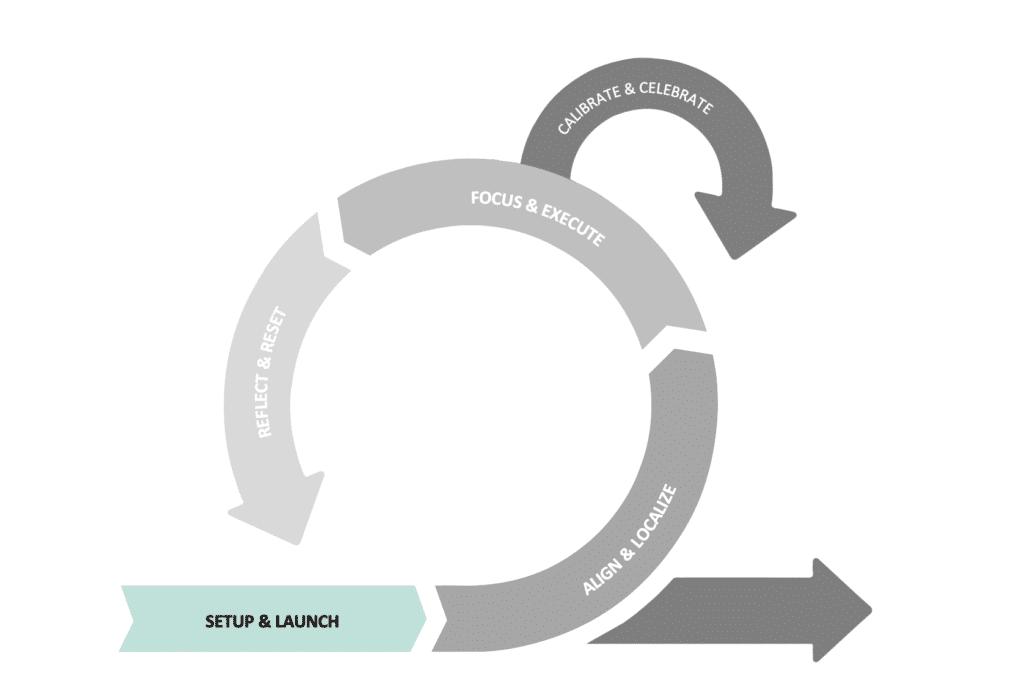
Phases of OKR framework
Defining the crucial variables that will define the OKR process is the first step towards a successful project launch.
These are:
Cadence: “What is the best frequency to set OKRs during the year?”
OKR Grading: “How do we celebrate success?”
Cascading vs Localization: “How will Objectives trickle down through the organization?”
Preferred Number of OKRs: “How many OKRs should we set per team?”
Individual vs Team OKRs: “Who is setting OKRs?”
When it comes to organizational change, understanding the motivations behind it is crucial.
By gaining insight into the reasons driving the change, we can effectively communicate its benefits and inspire others to join us on the journey.
Effective communication plays a pivotal role in ensuring a successful and seamless transition.
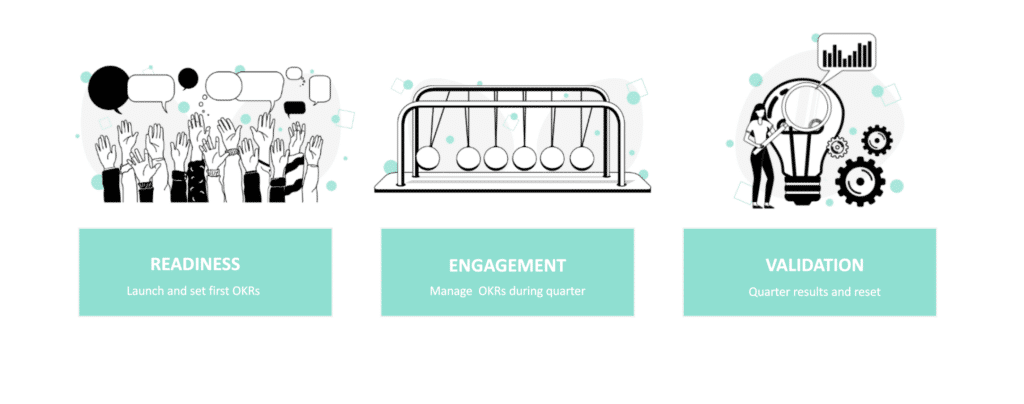
To establish a strong communication standard during implementation, work through three steps: readiness, engagement, and validation.